AdBlue Warning Light: Causes, Symptoms and Solutions
What Does an AdBlue Warning Light Mean?
An AdBlue warning light indicates that the vehicle’s Selective Catalytic Reduction (SCR) emissions system has detected a condition that requires attention. Depending on the manufacturer and fault type, the warning may appear as a simple dashboard light, a text message, or a countdown warning advising that the vehicle may eventually be prevented from starting.
The SCR system is designed to reduce harmful nitrogen oxide (NOx) emissions by injecting AdBlue fluid into the exhaust system. When the system detects a problem, it stores a fault code and alerts the driver.
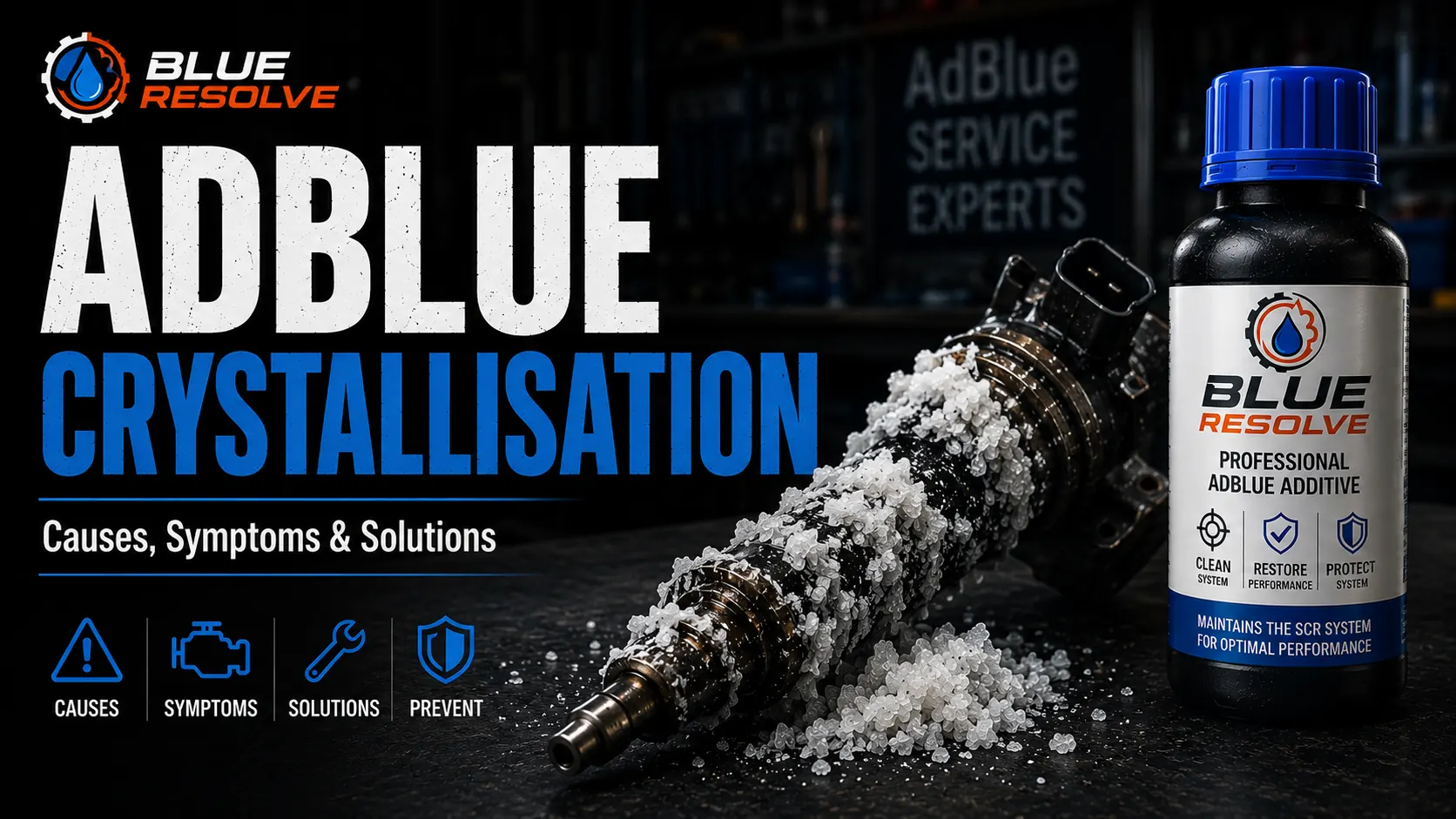
Common causes include low AdBlue levels, poor AdBlue quality, crystallised deposits within the system, NOx sensor faults, AdBlue injector issues and SCR efficiency problems.
Ignoring an AdBlue warning can lead to further fault messages, reduced engine performance and, in some vehicles, a no-start countdown that limits operation until the underlying issue has been resolved.
Why the warning light comes on
An AdBlue warning light is the car’s way of saying the emissions system is not working as designed. The SCR system relies on several sensors and components working together. If one part reads outside its expected range, the control module logs a fault and turns on a warning. Some warnings are minor and clear on their own. Others start a countdown that ends with the engine being prevented from starting.
Because the warning can have several causes, the light alone does not tell you which part has failed. A proper diagnostic scan that reads the fault codes and live data is the only reliable way to narrow it down.
Warning types and what they usually mean
- AdBlue level low: The tank needs topping up with correct AdBlue. This is the simplest case, but a low-level warning can also appear if the level sensor is faulty.
- Check AdBlue or engine light: The system has detected a fault that needs a diagnostic scan.
- Countdown warning: A fault has been present for some time. The countdown shows the distance left before the engine will not restart. This needs prompt attention.
- Warning that clears and returns: Often points to an intermittent fault, such as a loose connector, a sensor reading near its limit, or early crystal build-up.
Most common causes
The usual causes are a faulty NOx sensor, a blocked or crystallised injector, a failing AdBlue pump, poor-quality or diluted fluid, and wiring faults. Software issues can also trigger the warning, and some manufacturers release updates to address false readings. For a closer look at individual faults, see our guides to NOx sensor failure symptoms and AdBlue injector faults.
What to do when the light comes on
- Check the AdBlue level and quality. Top up only with correct, certified AdBlue from a sealed container.
- Note the warning details. Write down the message, the mileage, and whether a countdown is shown. This helps the technician.
- Get the codes read. Use a full diagnostic tool that can read SCR data, not just engine codes.
- Do not replace parts on guesswork. Confirm the fault before fitting new components.
- Book the diagnosis early if there is a countdown. The earlier the fault is found, the simpler the repair is likely to be.
Can I keep driving with the warning on?
A warning light with no countdown usually means the car can still be driven, but the fault should be diagnosed soon. Continued driving can allow a minor fault to become a more serious one, and emissions performance may be reduced. If a countdown is displayed, treat it as urgent. The vehicle may refuse to start once the countdown reaches zero.
For general information on emissions and vehicle checks in the UK, the DVSA website is a reliable source.
Preventing AdBlue warning lights
Good habits reduce the chance of the warning appearing. Use correct AdBlue, keep the filler area clean, avoid running the tank very low, and deal with early warnings promptly. Some owners also use a preventive treatment to help reduce crystal build-up. Blue Resolve Ad Fix Protect is designed to help prevent crystal formation in AdBlue and SCR systems. It is not a repair and does not replace diagnosis. Details are on the Blue Resolve Ad Fix Protect product page.
Related guides
- AdBlue warnings and no-start countdowns: what to check first
- AdBlue crystallisation
- SCR system fault explained
More from OBD Store
Disclosure: Blue Resolve and OBD Store are owned by the same company. For more detail, see OBD Store’s AdBlue System Recovery Fluid for cars and vans. Check the product description and vehicle compatibility before buying any treatment.